Quarterly Update: How I Track Goals and Habits in My Journal
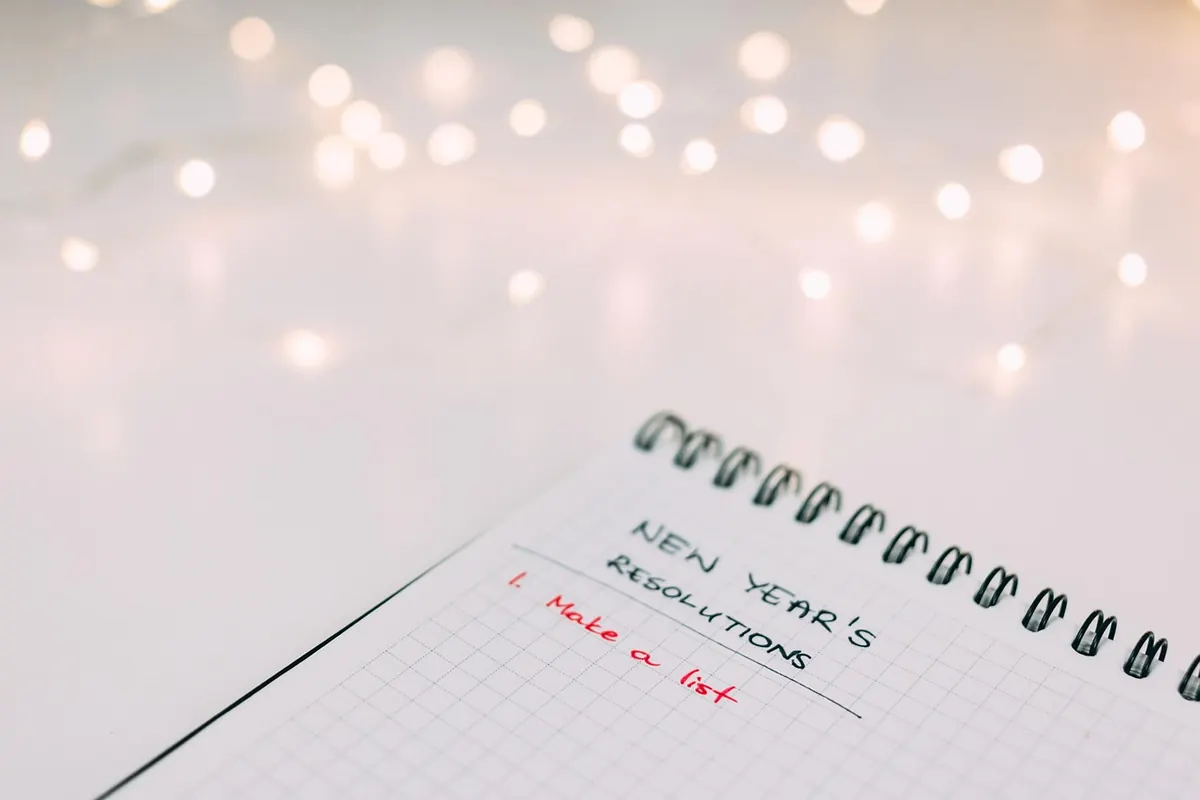
Every quarter I clear an evening, make a pot of tea I will forget to drink, and read back through ninety days of handwriting. Some reviews feel like a small celebration. This one felt more like a polite disagreement with my past self. I set out to do three things well and managed one and a half of them, which is not a disaster, but it is also not what I wrote down three months ago.
The habit side of things, though, had its best run in a long while. So this update covers both halves: the tracking that finally clicked, the goal-setting that did not, and the three changes I am making before the next quarter begins.
Three goals went into the quarter. Finish the second draft of a long writing project. Run three times a week. Read more consistently rather than in frantic bursts. Alongside those sat six habits: a daily line in the journal, no phone before breakfast, ten minutes of tidying, stretching, reading before bed, and one long walk each week.
Six habits and three goals is, I now think, about two habits and one goal too many. But the point of writing them down is that you find that sort of thing out. Memory is generous; a notebook is not.
Nothing here is clever. It is deliberately boring, because a system that needs motivation to maintain is a system that collapses in week three.
That is it. The monthly page takes five minutes. The daily line takes one. The heavy lifting happens four times a year and during the Sunday spreads, which is why they are the two parts I protect most carefully.
The single-page habit grid was the winner. Ninety boxes on one sheet, visible at a glance, no scrolling, no app, no notifications. Seeing a run of ticks in a row made me reluctant to break it, in a way that a number on a screen never has.
The second thing that worked was writing a minimum version next to every habit. Stretching meant ninety seconds, not a full routine. Running meant shoes on and out of the door, even if I turned round after ten minutes. On a bad day I could still get a tick, and a tick on a bad day is worth more than a perfect week followed by a fortnight of nothing.
The Sunday three questions kept the monthly page honest. They are short enough that I never skipped them, and specific enough that I noticed patterns — most of my missed habits happened on days with evening plans, which is obvious in hindsight and invisible at the time.
Finally, blank pages. Some days had nothing worth recording. Leaving them empty instead of filling them with an apology removed a surprising amount of guilt from the whole exercise.
The goals, mostly. Three was one too many, and the writing project took whatever energy was left after the other two. It moved, but slowly, and I spent most of the quarter feeling behind on something I had chosen to do.
I also tried a habit-tracking app for a fortnight. The problem was not the app; it was the phone. Every time I opened it to tick a box, I came away with three other things to think about. The paper version won by default.
Counting words was another misstep. The moment a number was attached, I started producing words rather than sentences, and then spent the following week deleting most of them. There is a lesson in that about measuring the thing you actually care about, though I suspect I will need to learn it twice.
And one habit — the long walk — depended on a clear weekend and decent weather. Two things I cannot schedule. It got ticked six times out of thirteen, which is roughly what a habit built on ideal conditions deserves.
I am also removing two habits from the list entirely. Fewer boxes, ticked more often, tells me more than a crowded grid ever did.
If you want to run something similar, this is the sequence I use. It works better as a routine than as a burst of enthusiasm.
The point of all this is not a tidy system. It is being able to say what actually happened over three months, rather than what I assume happened. That alone has changed how I plan, mostly by making me plan less.
One caveat worth stating plainly: a journal is a thinking tool, not an expert. If a goal touches on your health, your money or anything with legal weight, use the notebook to work out your questions, then take those questions to someone qualified. Better a short conversation than a confidently wrong page.
For now, the next review is in the diary, the main goal has three mornings reserved, and the habit list is down to five. That feels like the right size. If the last quarter taught me anything, it is that the smaller version of a plan is usually the one that survives contact with an ordinary Tuesday.
Photo: StockSnap / Pixabay
Previous Post
A Checklist for Your First Solo Trip in the UK
Next Post
Winter Journalling Prompts for Dark Evenings and Quiet Reflection