A Checklist for Your First Solo Trip in the UK
The first solo trip is rarely decided in a moment of bravery. More often it is a Tuesday evening, a cheap train fare, and a quiet thought that you could simply go. What follows is usually a fortnight of low-level fretting about the wrong things — whether you will look odd eating alone (you won't), whether the hostel will be strange (sometimes, in the best way) — and not nearly enough thought about the practical bits that decide whether a trip feels easy or exhausting.
This checklist is the one worth running through before you leave. None of it is dramatic. All of it helps.
Decide early whether you want a moving trip or a staying-put trip. Both are good; mixing them badly is what causes misery. Three cities in five days sounds adventurous until you are hauling a rucksack through Birmingham New Street at six in the evening.
A gentler first solo trip looks like this: pick one base, then take two or three day trips from it. Whitby, with a bus out onto the moors. Glasgow, with a train up to Loch Lomond. Norwich, with the coast an hour away by rail. Build in one completely empty afternoon with nothing booked at all.
The great advantage of travelling alone is that you can change your mind without negotiating with anyone. Protect that by not over-scheduling. Sketch the rough plan somewhere you can see it, then accept now that you will alter at least a third of it.
Trains are the backbone of most UK trips. Advance single tickets are usually cheaper than turning up on the day, but they tie you to one specific train, and missing it can mean buying a fresh fare. If you would rather not carry that worry, a flexible or Off-Peak ticket costs more and forgives more. It is worth checking whether a Railcard suits your plans, particularly if you qualify for one through age or a disability.
Coaches are slower and cheaper, and many run overnight. That is fine if you sleep on buses and miserable if you don't. For long cross-country journeys, ask at a ticket office about splitting the route into separate tickets — staff will often do this for you if you ask.
Book your first night properly. Somewhere with a reception desk and a human being to answer questions beats a bargain lockbox every time. A hostel, a budget hotel or a small B&B all work; what matters is arriving to a person rather than a keypad and a code you can't read in the dark.
Contactless bank cards work on buses, trams and the Underground across most UK cities. In London, fares are capped daily, so you can tap in and out without doing sums. Elsewhere, a day ticket bought from the driver often pays off if you plan several journeys.
Download the local operator's app and Citymapper before you go, and screenshot the routes you expect to use. Signal drops in rural areas and underground stations, and a saved image has rescued many an evening.
If you're driving, check clean air zones and parking rules for each city centre before you arrive, as several now charge. Rural buses can run once every two hours and stop early, so photograph the timetable at the stop rather than trusting memory.
British weather changes its mind in the space of one afternoon. Layers beat bulk, and a hooded waterproof jacket is worth more than an umbrella, which will simply invert in the wind.
Then halve it. Launderettes and hostel washing machines exist, and a lighter bag makes every staircase, bus and train change easier. Whatever you leave behind, you can usually buy within a day.
Tell someone at home your rough route and when you expect to arrive each evening. A shared location or a short text on arrival takes ten seconds and gives you a safety net that doesn't require you to look over your shoulder all day.
Aim to arrive in a new place before dark where you can, at least for the first night. When you do go out in the evening, use licensed taxis or a booked minicab and check the plate matches the app. Trust your instincts about people and places: leaving a pub early costs nothing.
Keep your phone charged and a small amount of cash on you — some rural buses and cafés still prefer it. Avoid announcing on social media that your room is empty until you are safely home; a message to friends is plenty.
If you are travelling far from home, arrange travel insurance and read what it actually covers before you need it. For anything medical, financial or legal, speak to a qualified professional rather than relying on a forum thread or a well-meaning stranger.
One notebook and one pen, with the pen attached so it can't wander off. That is the whole system. Anything more elaborate tends to collapse by day three.
Use these for logistics: booking references, addresses, phone numbers, train times, the name of the hostel. It saves scrolling through emails in a doorway with a rucksack on.
Don't write essays. Date, place, weather, what you ate, who you spoke to, and the one thing that surprised you. Five lines is a good entry. Twenty is a great one, but five on a tired evening is infinitely better than nothing.
Finish each entry with the sentence you would have texted a friend. It captures the tone of the day in a way that a list of landmarks never does, and it is the line you will enjoy rereading most in a year's time.
Then go to bed. The unglamorous hour you have just spent is what buys you the good part: standing on a platform with nowhere in particular to be until tomorrow, free to change the plan on a whim. If the first day feels flat or lonely, that is normal and it usually passes by the second afternoon — a walk, a hot meal and a written page tend to sort it. And if you are still unsure about something practical, ask. Station staff, hostel receptionists and bus drivers in this country are, on the whole, remarkably willing to help a person travelling on their own.
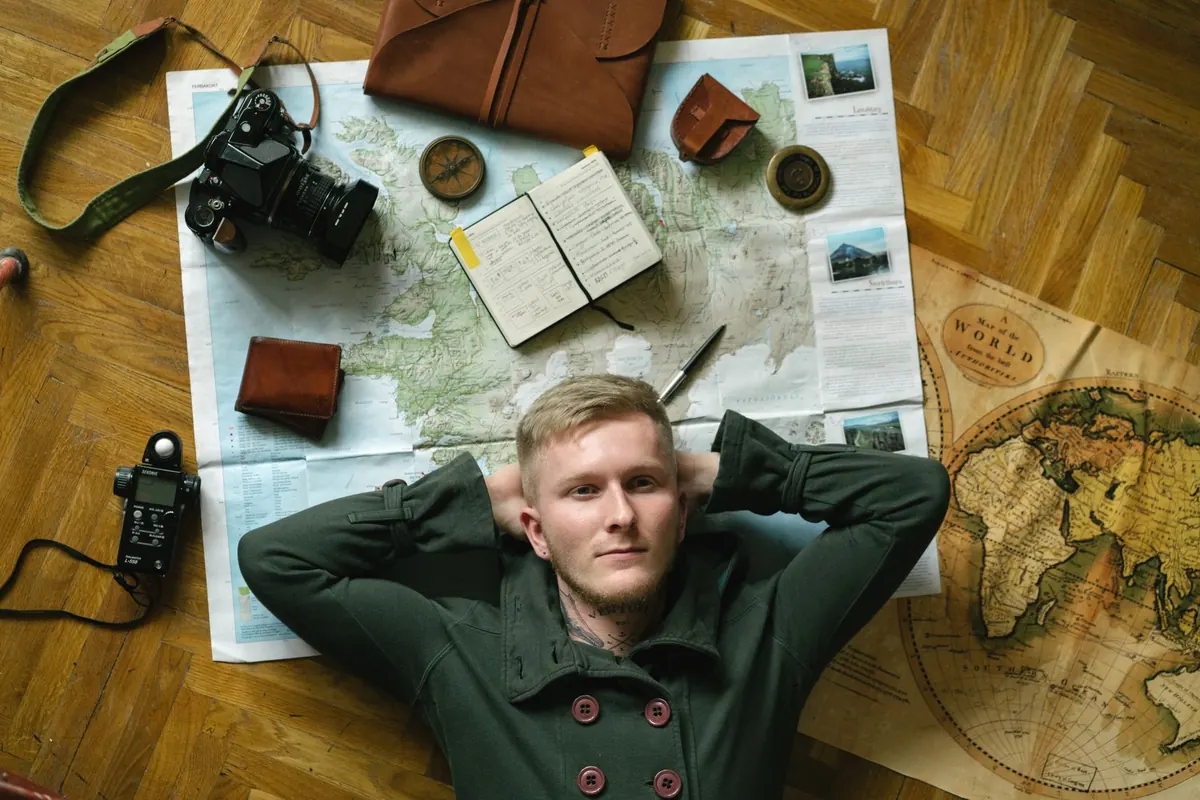
Photo: ArtHouse Studio / Pexels
Previous Post
Paper Journal vs Digital Journal: A Comparison for Everyday Life
Next Post
Quarterly Update: How I Track Goals and Habits in My Journal