Paper Journal vs Digital Journal: A Comparison for Everyday Life
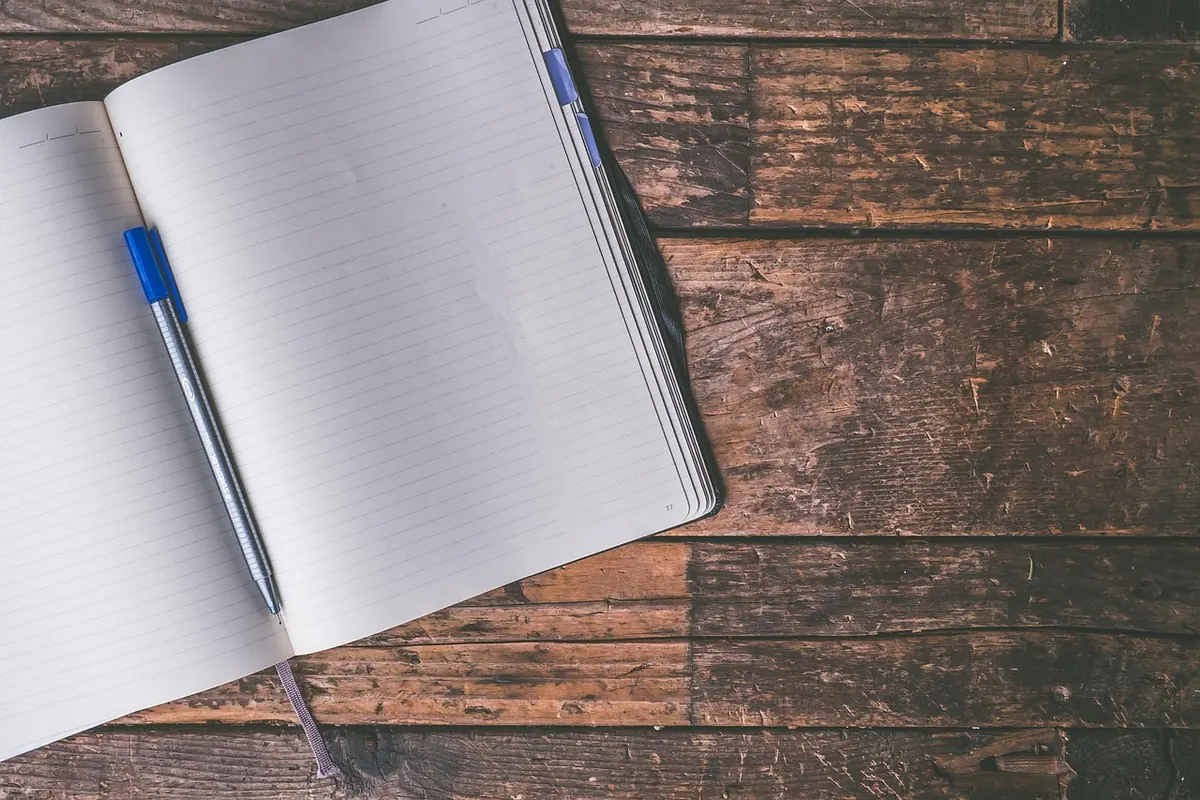
The notebook on my desk has a coffee ring on the cover and a receipt from a Tuesday in March tucked into the back. The notes app on my phone has four hundred entries and a search bar. Both do the same job, and neither does it quite the way the other does. If you have journalled for years, the decision is already made. If you are starting again, it is worth twenty minutes of thought, because the format quietly shapes what you write, how often you write it, and who ends up reading it.
A paper journal removes the exits. No notifications, no tabs, no sudden urge to check a message. You open it, you write, you close it.
Handwriting is slower than typing, and that speed limit changes what comes out. You compress. The throat-clearing goes. Sentences get shorter and often more honest, because there is no backspace and no temptation to edit the difficult part into something tidier.
Paper also holds memory differently. You remember that the argument was on the left-hand page, near the bottom, under a pressed train ticket. Rereading becomes physical: you flip, you stop, you find things you were not looking for. What you wrote in 2019 is still exactly where you left it.
Digital wins on anything involving finding, carrying or keeping. A decade of entries fits in your pocket, and a search for “Dad’s birthday” returns the entry, the date and the message you drafted.
You can attach a photograph of the flat you almost rented, or a voice note recorded on a walk when stopping to type would have broken your train of thought. Dictation and adjustable text sizes make journalling possible for people whose handwriting is slow or painful.
It also survives. A notebook left in a flooded cellar is gone; a file backed up in two places is not. The trade is that survival depends on passwords, accounts and the occasional dull bit of housekeeping.
Most journals die from friction, not from a shortage of interesting things to say. The one you keep is the one already in front of you. A notebook on the pillow beats one in a drawer downstairs; a note pinned to the home screen beats an app three taps deep.
A few rules that hold up over months rather than weeks:
A slim A6 notebook weighs almost nothing and never needs charging, which matters on a long day with no socket in sight. It does not care about signal or a cracked screen. Watch the ink, though: ballpoints cope with heat better than fountain pens, and a zip bag keeps the sand out.
The phone is better at the messy evidence of a trip — photographs, the time the train was cancelled, a map pin for a restaurant you would never find again. Use both. Take the photos as usual, then spend ten minutes each evening writing the day up while the names are still fresh.
Be honest about what you are protecting it from, because it is rarely a spy. Usually it is a flatmate, a partner, a curious teenager or a burglar.
Paper is readable by anyone who picks it up, and it vanishes entirely in a fire, a flood or a rushed move. If that worries you, a lockable box is cheap, dull and effective.
Digital has the opposite problem: easy to keep, easy to leak. Check the boring settings — lock-screen previews, whether your notes sync to a shared family account, whether the app backs up somewhere you would not have chosen. If you write about your health, your money or a dispute, decide where the file lives before you type. A personal journal is not automatically protected just because it is private; if you think what you are writing could end up in a legal process, ask a solicitor what might be disclosable.
Search is where digital is unbeatable and paper needs a system. If you want to find things in a notebook, build the index as you go: a couple of lines at the front for dates and page numbers, a coloured tab for the big events, and a few blank pages at the back for lists you add to across the year — books read, places stayed, things you keep meaning to do.
Reflection is different, and this is where paper tends to pull ahead. Flipping through three months of handwriting shows you patterns you would never think to type into a search box. The Tuesday entries where you were tired every week. The project you mentioned four times and never started.
The routine works in either format: on the first Sunday of the month, read last month’s entries with a pen and a blank page. Note three things — what went well, what dragged, what to change. Then close it.
You do not have to choose, as long as one format is clearly in charge. Two full journals maintained side by side will both be abandoned within a month.
Keep the digital side as an archive and a scrapbook; keep the paper side as the place where you actually think. If you would rather have it the other way round, that is fine. The only rule is that capture and reflection should not compete for the same ten minutes.
Start tonight with whatever is nearest. Date the page, write three sentences, and see which one you reach for tomorrow.
Photo: 6689062 / Pixabay
Previous Post
Journalling for Anxiety: A Gentle Explainer with Calming Prompts
Next Post
A Checklist for Your First Solo Trip in the UK