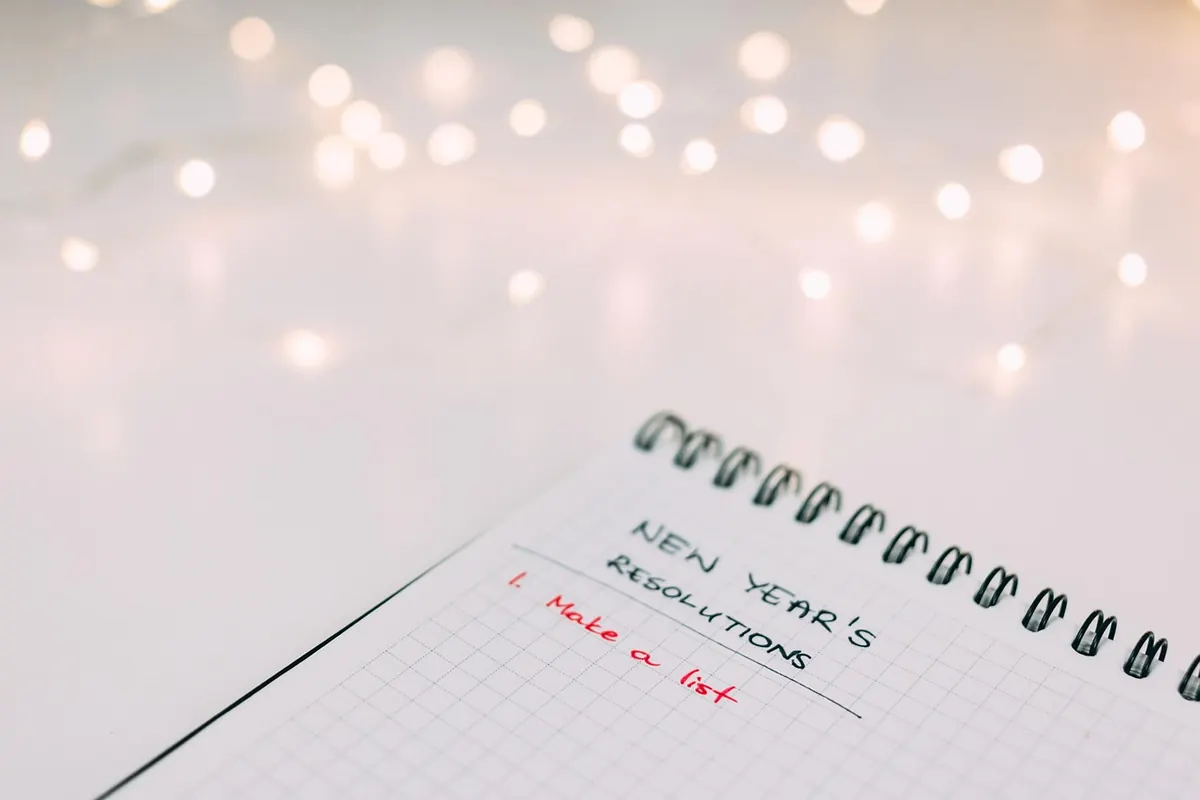
How to Start a Personal Journal: A Beginner's Guide for Busy Weeks

There's a certain notebook that gets bought in January: thick paper, a ribbon marker, a cover that looks handsome on a shelf. By February it holds three entries and forty blank pages. The problem was rarely discipline. It was the size of the promise. A journal doesn't need an hour of silence and a pot of tea; it needs five minutes and somewhere to put the pen down.
What follows is how to build that five-minute habit so it survives a full inbox, a loud kitchen and the evenings when you have nothing left to give. No special notebook required. No early mornings. No guilt.
Most people abandon journalling because they designed a habit for their best day. A full page, in neat handwriting, before breakfast. That plan collapses the first time a child is ill, a deadline moves or you sleep badly.
Aim instead for something a tired Tuesday can clear. Three sentences is an entry. One word is an entry. The date and a line about the weather is an entry.
Set yourself up so that starting is the easiest part of the day:
New habits hold better when they're attached to an old one. Don't invent a quiet half hour that doesn't exist; hang your five minutes on something that already happens without fail.
While the kettle boils. After you park the car at work. On the bus. After you brush your teeth. Last thing, once the light is off and the phone is face down. Be specific about the trigger: "after I sit down with the first coffee" works; "in the morning" doesn't.
If you write on your phone, set one repeating alarm and label it with a question rather than a command — "anything worth a line?" rather than "journal". Keep it off your work laptop. Anything personal is better kept on a device your employer doesn't own.
Structure removes the blank-page hesitation. Four short moves, in this order:
Add one of these: a detail you want to remember (the light, a smell, a song you heard twice); a question you don't need to answer tonight; or something that went right, written plainly rather than gratefully.
Write the date and one word. That's maintenance, not failure. The habit is the point, not the word count.
On the days you're running on empty, the entry doesn't need to be interesting. Try whichever of these takes less effort than making tea:
That last one counts. The value of a journal comes from the return, not from any single page. If writing about a difficult stretch leaves you feeling worse rather than lighter, it's worth talking things through with your GP or a counsellor — a notebook is a useful place to think, but it isn't support.
Five minutes hides in more places than you'd expect. In the car before you go into the house. At the kitchen table once everyone's gone upstairs. On a lunch break, on paper. In the supermarket car park after the shop.
If real privacy is impossible, write blandly and save the honest version for later. Or make it a household ritual: five minutes where everyone writes or draws something, no sharing required. Children often join in more willingly than you'd guess, and a shared silence is easier to keep than a secret one.
Don't wait for a quiet house and a clear head. That combination turns up about four times a year.
You will miss days. Build that into the plan rather than treating it as evidence that you're not the sort of person who keeps a journal.
Don't backfill. Writing Wednesday's entry on Sunday turns a journal into homework. The day you remember is the day you start again; leave the gap as a gap. Many people find "never miss twice" easier to hold than a perfect streak. If a reminder helps, keep it kind — a question, not a reprimand.
And if it has been three months, resist the urge to read the old entries and feel bad. Date today's page and carry on.
Five minutes a day builds something you can't get any other way: a plain record of your actual life, in your own words, with the small things still in it.
Once a month, give it ten minutes. Read back a few pages and notice what repeats — the same worry in different clothes, the names that keep appearing, the weeks that were better than they felt at the time. Write one line about what you noticed. That's the whole system: five minutes a day, ten minutes a month.
Tonight, all you need is the date and one sentence about today. That's day one.
Photo: Pexels / Pixabay